Joy in Movement

Wellness Newsletter. Food, Mood & Self Care
360 Fitness, Health & Wellbeing | APR 11
diet
gut biome
food & mood

I’ve just had a few days off and having chatted to a few of you we’ve all seemed to have fallen off the wagon with regard to making good food choices. Easter, along with Christmas, seems to be a time to a time of over indulgence which can in turn cause changes in energy, motivation and mood.
This leads me on to the subject of this weeks newsletter. Eating well as a form of self care.
Self care is extremely important and eating well and mindfully is a form of self care. Anyone that has had a negative relationship with junk food will understand the addictive and destructive patterns of eating that can cause immediate and long term ill effects.
As someone who has suffered with anxiety and depression as a result of undiagnosed ADHD I know that when you’re feeling low, self-care naturally becomes harder.
The junky “quick-fix” foods such as chocolate works in the moment to help temporarily boost mood and energy. The mix of sugar, fat, and salt gives a temporary lift, especially when you’re dealing with anxiety or low mood. Quick glucose fixes lead to sudden spike of energy and dramatic crashes which can see you picking at sugary foods on and off all day leading to the obvious increased risks of obesity, diabetes, heart disease and some cancers.
The issue is these foods are addictive to some people. Foods high in sugar, fat, and salt light up the brain’s reward centres and trigger dopamine — the “feel good” chemical linked to motivation and pleasure. If you live with ADHD, anxiety, or low mood, those dopamine pathways can be more sensitive or harder to regulate, which can make quick-hit foods feel even more rewarding and harder to resist.
The more we rely on junk food fixes however the more those pathways get reinforced, and the harder it can feel to choose foods that nourish you longer term.
There’s a gut link too. Your gut microbiome plays a huge role in mental health through the gut-brain axis. What you eat feeds your gut bacteria, and those bacteria influence mood, inflammation, and even how neurotransmitters like dopamine and serotonin function. Junk diets lead to a poor gut biome, increased inflammation, decreased energy and poor mood.
So how do you support a healthier gut and regulate blood sugars for long term health?
Add more fibre — Include vegetables, fruits, wholegrains, beans and pulses. Fibre feeds your good gut bacteria.
Include a variety of plant foods — different colours add a range of beneficial phytonutrients, which support gut diversity and overall health. 30 plants per week are considered to be ideal for and this can include :
Fruits, Berries, Dried Fruit, leafy greens, cruciferous vegetables, root veg, veg stems, seeds, pulses, legumes, nuts, herbs, spices, healthy oils.
Prioritise protein — Eat protein with every meal as it helps stabilise blood sugar, supports repair, and keeps you fuller for longer, reducing those constant cravings. Minimum protein requirements for sedentary individuals is 1.2g protein per KG body weight. Ageing people & menopausal women need to consume more protein to mitigate muscle loss and active people need to consume more build and repair muscle. Think 1.5g+ protein per KG bodyweight.
Add in fermented foods where you can — yoghurt, kefir, sauerkraut — to introduce beneficial bacteria to your but biome.
Please be realistic. You don’t need perfection, just more consistency. One wobble doesn’t undo everything. You don’t have to write the whole day off because you’ve overdone it on the chocolate HobNobs! Pause. Breathe. It happens.
Notice the small wins. Acknowledgment of the little wins gives you a natural dopamine surge. Praise yourself for choosing an apple.
Over the next month pay attention to how you feel, not just immediately after eating, but 10–30 minutes later. Notice how you feel at 2pm (the afternoon slump). Notice your energy, mood, digestion, skin, and sleep. Do you feel a difference in your body with regards food choices?
Self-care is about supporting your body and your mind. From someone who has used food for comfort, I understand. You don’t have to be perfect. Just aim to make one better choice next time, and be proud when you do 🤍
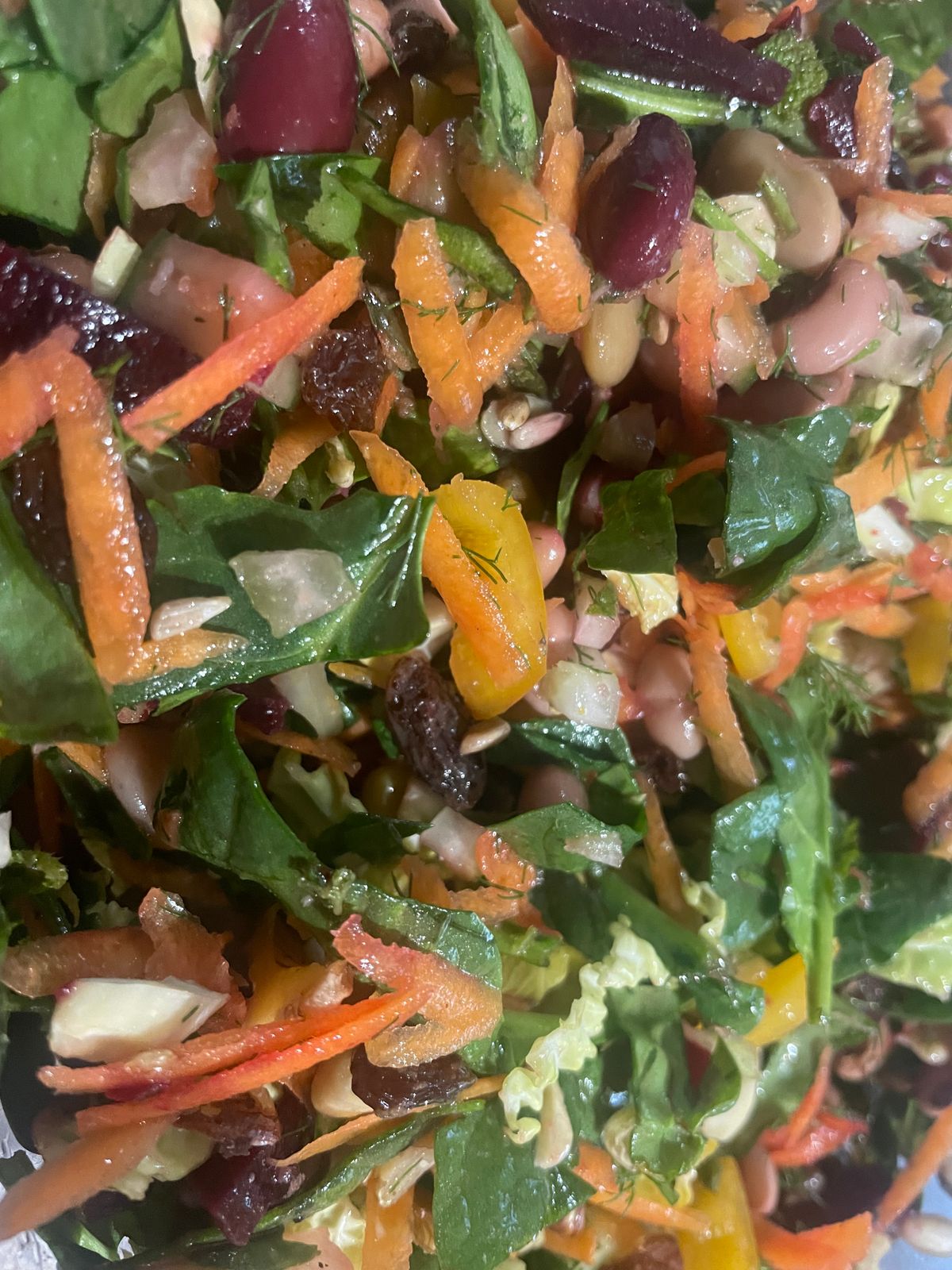
Superfood Salad
Create an easy build super food salad with whatever you have in your fridge or garden - chop everything small. Add a dressing and mix well !
Ingredients:
Spinach - Large handful
Cabbage, One big slice
1 stalk celery,
1 small yellow pepper,
1 grated carrot,
3 baby beetroot,
3 inch cucumber,
Half tin 5 mixed beans,
2tbsp Sultanas
2 tbsp mixed nuts (hazel, cashew, walnut, almond)
1 tbsp mixed seeds (pumpkin, sunflower, hemp, linseed)
3 stems fennel leaf *
10 leaves lemon balm leaf *
Dressing
Lemon rind
Lemon juice
Olive oil
Sea salt
Black pepper
The fresh fennel & lemon balm (*from my herb garden) with lemon gives it a lovely zing. You could use fresh, coriander, mint, basil or parsley
26 plant ingredients!!
Eat the rainbow. Nutritious, high fibre, protein, healthy fats, vitamins, minerals and phytonutrients. Eat alone or as a side with lean protein and healthy carbs.
Each mouthful tastes and feels different in the mouth and thus can trigger the reward pathways in the brain, particularly if your brain likes novelty!
Enjoy!! x Laura
360 Fitness, Health & Wellbeing | APR 11
Share this blog post

© 2026 360 Fitness. Health. Wellbeing