Joy in Movement

Why Jaw Tension Is Disrupting Your Breathing, Pelvic Floor, and Posture
360 Fitness, Health & Wellbeing | JAN 17
pelvic floor health
Why Jaw Tension Is Disrupting Your Breathing, Pelvic Floor, and Posture
Your jaw tension could be quietly affecting your breathing, posture, and pelvic floor function.
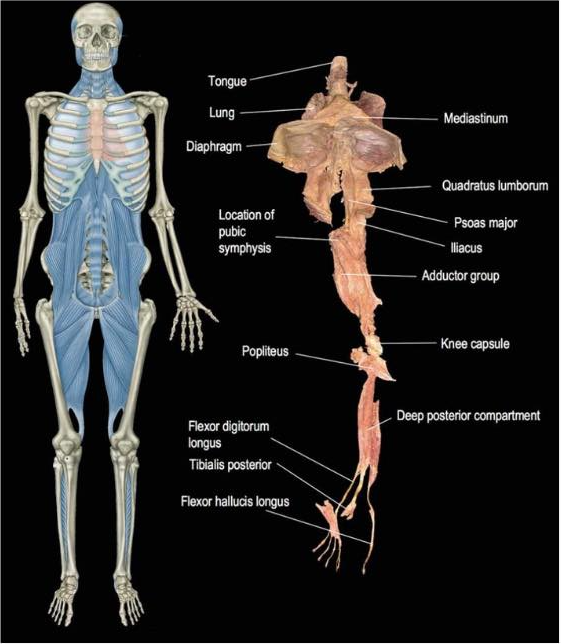
The jaw, diaphragm, and pelvic floor don’t work in isolation. They work as a coordinated system, linked through shared neural (nerve) and fascial (connective tissue) pathways.
The connections form in the following way:
Embryological connection
Very early in development — around day 15, during a phase called gastrulation — the body begins to organise its basic structures.
At this stage, two depressions form close to one another. One goes on to form the opening of the mouth. The other develops into the openings of the urethra (where we pass urine), anus, and reproductive organs.
From the very beginning, the mouth and pelvic floor are developmentally linked.
This early connection helps explain why tension or holding patterns in the jaw can be reflected in the pelvic floor later in life. The body remembers its earliest wiring — and it still responds as one connected system.
Fascia Connection
Fascia is the body’s connective tissue. It wraps around and links muscles, bones, organs, blood vessels, and nerves, helping everything stay supported and organised. Central to this connection is the dural tube (dura mater), a protective sheath that encases the brain and spinal cord, anchoring at the skull and the sacrum.
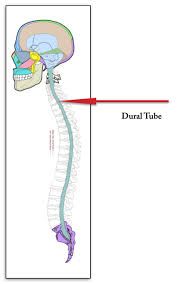
Because fascia is continuous, tension held in one area can travel and be felt elsewhere in the body. This is why a tight jaw can influence breathing, posture, and even the pelvic floor.
Vagus nerve
The vagus nerve is a long, important nerve that runs from the brainstem and through the spine and links the back of the tongue, the vocal cords, and even the uterus.
It’s a key pathway to the brain for calming the body, because it’s part of the parasympathetic nervous system — the “rest and digest” system that helps us feel safe, grounded, and connected. Opposingly the vagus nerve triggers the sym[athetic nervous system and our fight, freeze or flight response
Stimulating the vagus nerve through breath, voice, or gentle movement can help relax not just the jaw, but the whole body from head to pelvis. On the other hand if we tighten the jaw we can trigger fight or flight.

Mirror connection
Have you ever noticed the similarities between different structures in the body?
The shape of the uterus closely resembles the larynx. The vocal cords mirror the pelvic floor. Even the cervix and vaginal canal share structural similarities with the throat and airway.
Artist and anatomist Luisa Alexandre beautifully illustrates these visual parallels, highlighting how the upper and lower parts of the body often reflect one another in form as well as function.
These mirrored structures offer another way to understand why tension, voice, breath, and pelvic floor function are so closely linked — not just mechanically, but as part of one integrated system.When the jaw stays tense or clenched, the rest of the body mirrors this and adapts.

When the jaw is clenched:-
🔹The diaphragm is held higher and struggles to fully descend, making breathing more shallow.
🔹This increases downward pressure, causing the pelvic floor to brace by gripping or over-tightening (the pelvic floor is designed to be springy and responsive, not held tight)
🔹The core becomes rigid rather than adaptable. Posture begins to shift — the head moves forward, the rib cage collapses, and the lower back tightens
🔹Over time, this pattern can contribute to persistent lower back tension, hip discomfort, reduced pelvic floor coordination, and inefficient breathing.

In a Nutshell :
Tight jaw →
Shallow breathing →
Pelvic floor gripping →
Poor core support →
Postural collapse →
Discomfort / pelvic floor dysfunction .
.
A relaxed jaw allows:
🔹The diaphragm to drop and breathe fully
🔹The pelvic floor and core to soften and respond naturally with the breath
🔹The pelvis to stabilise
🔹The spine to decompress naturally
Try this simple awareness exercise
Close your eyes and breathe normally.
Don’t change the breath — just notice it.
Scan your body.
How do your shoulders, chest, ribs, back, and pelvis move as you breathe?
Does it feel free and easy, or is there tension?
Now gently clench your jaw.
Keep breathing and scan again.
Notice what changes.
You may feel stuck or unable to breathe as fully.
You may notice pelvic tension or gripping.
You might also feel more emotionally charged — anxious, irritated, or frustrated.
Now soften the jaw.
Let the tongue rest.
Notice how your breath, pelvis, and lower body respond.
Jaw & pelvic floor release exercise
• Place the tip of your tongue softly on the roof of your mouth behind the teeth
• Let your teeth separate slightly — lips soft, jaw heavy
• Inhale through the nose and feel the ribs widen and the back and belly expand
• Exhale and gently sigh or hum. Imagine the pelvic floor softening and widening
• Let the jaw melt down on every exhale
Repeat for 4–6 slow breaths.
Posture does not need to be forced. Postural changes can come with simple shifts. Changes in wellbeing don't have to be massive. Sometimes the smallest change can have the biggest impact

360 Fitness, Health & Wellbeing | JAN 17
Share this blog post

© 2026 360 Fitness. Health. Wellbeing